
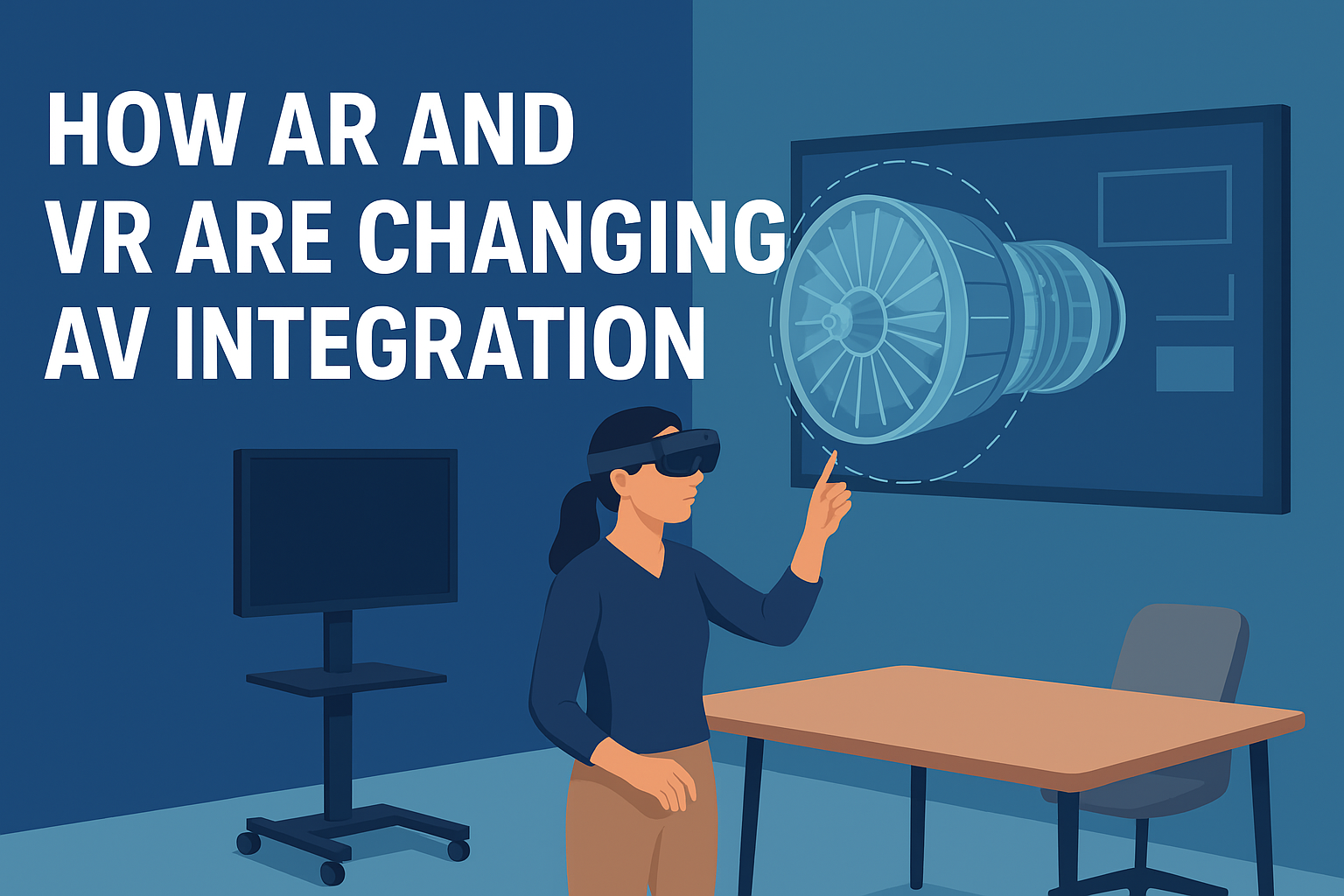
The Future of AV Is Immersive
The audiovisual (AV) industry is undergoing a profound transformation. As organizations seek more engaging, interactive, and efficient ways to communicate, augmented reality (AR) and virtual reality (VR) are emerging as game changers. Together, AR VR in AV integration is redefining how we experience information from boardrooms and classrooms to control centers and entertainment venues.
In the past, AV systems focused primarily on displaying content high-resolution screens, crisp sound, and seamless connectivity. Today, with AR/VR technologies integrated into these environments, users can interact with content in entirely new ways. Imagine walking into a meeting room and visualizing 3D product prototypes in front of you, or students engaging with historical events through immersive simulations.
At the heart of these experiences lies advanced AV integration the blend of displays, mounting systems, processors, sensors, and ergonomic design that ensures these technologies work flawlessly. Brands like VSYS AV, with their innovative video wall mounts, display carts, and ergonomic setups, are enabling the next generation of immersive environments.
1. Understanding AR and VR in AV Integration
Before diving deeper, it’s essential to understand what AR and VR mean within the AV context.
- Augmented Reality (AR): Enhances real-world environments by overlaying digital information such as images, data, or 3D models on to physical spaces.
Example: Interactive classroom lessons where students view 3D anatomy models through AR glasses. - Virtual Reality (VR): Creates a completely digital environment that immerses the user in a computer-generated world.
Example: Virtual training rooms where employees can safely practice complex procedures.
When integrated with AV systems, AR and VR add a new layer of depth and interactivity to traditional displays, making content more engaging and informative.
2. Why AR and VR Are Transforming the AV Industry
The convergence of AR VR and AV systems is transforming industries by bridging the gap between digital and physical experiences. Here’s how:
a. Enhanced User Engagement
Traditional AV systems rely on visual and auditory stimuli. AR and VR add spatial awareness, interactivity, and immersion, leading to higher retention and engagement. Whether for a product demo or a virtual campus tour, these technologies capture attention like never before.
b. Smarter Collaboration
In hybrid workplaces, AR and VR empower remote teams to collaborate in shared virtual spaces. Through immersive meeting environments, participants can visualize 3D models, annotate in real time, and interact naturally no matter where they are.
c. Efficient Training and Education
From healthcare simulations to corporate training, AR/VR-enabled AV systems provide safe, repeatable, and engaging learning experiences. This approach reduces costs while enhancing learning outcomes.
d. Advanced Visualization and Control
In command centers or design studios, AR and VR can visualize complex data or 3D environments interactively. When combined with VSYS AV video wall systems, operators can move seamlessly between physical displays and virtual overlays for faster decision-making.
3. Common Challenges in AR/VR AV Integration
While promising, integrating AR and VR into AV environments comes with unique challenges. Understanding and addressing these ensures a smoother deployment.
a. Hardware Compatibility
Many organizations struggle to synchronize AR/VR devices with existing AV setups especially when it comes to displays, processors, and mounting systems.
Solution: Invest in flexible mounting solutions such as VSYS AV’s adjustable video wall mounts and display carts that support various screen sizes and configurations. These enable easy integration of AR/VR hardware without redesigning the entire setup.
b. Cabling and Connectivity
AR/VR systems demand high-speed data transmission, low latency, and power-efficient connections often leading to complex cabling setups.
Solution: Implement professional AV cable management systems and motorized ceiling mounts from VSYS AV that allow cleaner, safer, and more efficient installations.
c. Space and Ergonomics
Immersive experiences require movement and comfortable interaction zones. Poorly designed setups can limit usability or cause fatigue.
Solution: Ergonomic monitor arms and sit-stand display carts from VSYS AV allow flexible positioning, reducing strain and improving user comfort during extended VR sessions or AR demonstrations.
d. Cost and Scalability
AR and VR integration can be expensive if not planned properly. Many projects fail due to high upfront costs or limited scalability.
Solution: Start with modular AV infrastructure using VSYS AV’s scalable mounts and carts that grow with your system. This ensures long-term value and adaptability.
4. Practical Applications of AR/VR in AV Integration
Let’s explore real-world applications where AR VR in AV integration is revolutionizing operations.
a. Corporate and Hybrid Workspaces
In hybrid offices, AR and VR enable more immersive presentations and collaboration:
- VR-based boardrooms where remote participants share a virtual workspace.
- AR overlays that enhance whiteboard sessions or design discussions.
- Motorized displays from VSYS AV that adjust for different presentation formats.
b. Education and Training
Interactive learning environments benefit immensely from AR/VR integration:
- 3D visualizations of scientific concepts.
- Immersive history lessons or virtual campus tours.
- VSYS AV display carts for flexible classroom use, allowing seamless content mobility.
c. Retail and Product Demonstrations
AR mirrors, VR showrooms, and interactive kiosks elevate customer experiences:
- Customers visualize furniture or clothing in real space.
- Brands use VSYS AV video wall systems to display interactive VR experiences.
d. Healthcare and Simulation Labs
AR/VR tools are vital for medical training, anatomy visualization, and remote surgery assistance:
- Students can explore virtual organs in 3D.
- Surgeons can practice using AR-guided systems.
- Ergonomic AV mounts keep displays at optimal eye level for long procedures.
e. Entertainment and Event Spaces
The entertainment sector is one of the biggest adopters of AR/VR:
- Immersive concerts and virtual theater performances.
- Interactive museum exhibits.
- VSYS AV motorized ceiling mounts enable dynamic display movement for dramatic visual effects.
5. How VSYS AV Supports AR/VR-Driven AV Integration
As AR and VR adoption grows, VSYS AV is at the forefront, offering mounting and display solutions designed for flexibility, precision, and performance.
a. Modular Display Systems
VSYS AV’s video wall mounts and display carts are perfect for immersive content setups. Their modular design supports large-format screens, ensuring immersive visuals are securely displayed in any configuration.
b. Ergonomic and Adaptive Mounting
For AR/VR-enabled training or hybrid workspaces, VSYS AV’s ergonomic monitor arms and motorized mounts enhance comfort and adaptability. They allow users to adjust screens effortlessly during interactive sessions.
c. Clean and Efficient Cable Management
High-performance AR/VR setups require reliable connectivity. VSYS AV’s professional cable management solutions maintain neat, interference-free environments crucial for low-latency performance.
d. Mobility and Flexibility
In educational or event environments, flexibility is key. VSYS AV’s mobile display carts enable you to move AR/VR-enabled displays easily between rooms or setups maximizing usability and ROI.
e. Reliability and Design Excellence
Built with durability and precision, VSYS AV products ensure seamless integration, long-term reliability, and a professional aesthetic essential for corporate, educational, and public environments.
6. Trends Shaping the Future of AR/VR in AV Integration
The synergy of AR, VR, and AV is accelerating rapidly. Here are the top trends defining the future:
a. Mixed Reality (MR) Environments
The boundary between AR and VR is blurring. Mixed Reality combines both, allowing users to interact with physical and digital objects simultaneously ideal for control rooms, training, and engineering applications.
b. AI-Enhanced AV Systems
Artificial intelligence is optimizing AR/VR experiences from adaptive lighting and sound to real-time gesture recognition enabling smarter, context-aware AV environments.
c. Spatial Audio Integration
3D soundscapes complement immersive visuals. Integrating spatial audio into AR VR AV setups enhances realism and user engagement, particularly in entertainment and simulation.
d. Cloud-Based AV Control
Cloud platforms are centralizing AR/VR AV management, allowing remote configuration, updates, and analytics. VSYS AV’s modular mounts and carts can easily support cloud-connected displays and control systems.
e. Sustainable and Energy-Efficient Design
As AR/VR installations grow, sustainability matters. VSYS AV’s eco-friendly designs promote efficient use of materials and reduce installation waste aligning innovation with responsibility.
7. Expert Best Practices for Successful AR/VR AV Integration
Here are key recommendations to ensure effective implementation:
- Start with Clear Objectives – Identify specific use cases (training, collaboration, visualization) before selecting hardware.
- Prioritize Infrastructure – Choose scalable AV mounting and cabling systems to support future upgrades.
- Ensure Ergonomic Comfort – Use adjustable mounts like VSYS AV monitor arms to accommodate various user heights and postures.
- Optimize Room Layouts – Ensure enough space for movement and interactivity.
- Focus on Connectivity – Use high-bandwidth cables and organized routing systems for seamless AR/VR performance.
- Plan for Maintenance – Choose modular AV systems that simplify servicing and component replacement.
- Test User Experience – Evaluate comfort, latency, and interaction before full deployment.
FAQs: AR VR in AV Integration
1. What does AR VR mean in AV integration?
It refers to the combination of augmented and virtual reality technologies with audiovisual systems to create immersive, interactive experiences in physical spaces.
2. How do AR and VR enhance traditional AV setups?
They add interactivity, depth, and engagement turning standard displays into immersive environments for collaboration, education, and entertainment.
3. What industries benefit most from AR/VR AV integration?
Corporate offices, education, healthcare, retail, entertainment, and manufacturing sectors all gain from immersive visualization and interactive learning.
4. Do I need special hardware for AR/VR AV setups?
Yes. High-performance displays, sensors, and ergonomic mounts such as VSYS AV monitor arms and video wall systems are essential for reliable performance.
5. How does VSYS AV support AR/VR integration?
VSYS AV provides professional-grade mounts, carts, and ergonomic solutions designed for flexibility, precision, and seamless integration with AR/VR hardware.
6. Is AR/VR AV integration expensive?
Costs vary by scope, but modular systems from VSYS AV make integration scalable and cost-effective over time.
7. Can AR and VR be used together?
Yes, in Mixed Reality (MR) setups that combine real and virtual elements for advanced interactive experiences.
8. What’s the future of AR/VR in the AV industry?
Expect more AI-driven, cloud-based, and sustainable AV systems that make immersive technology accessible and adaptable to every workspace.
Bridging the Physical and Virtual Worlds with VSYS AV
As AR and VR technologies continue to evolve, they’re redefining the possibilities of audiovisual integration turning displays into immersive canvases and spaces into interactive environments. From hybrid meetings to immersive classrooms and virtual showrooms, AR VR in AV integration is setting new standards for communication, engagement, and efficiency.
To harness these possibilities, organizations need robust, flexible, and ergonomic AV infrastructure the kind that VSYS AV is known for. With precision-engineered mounting systems, video wall solutions, and mobile display carts, VSYS AV empowers businesses and institutions to build immersive environments that inspire, educate, and connect.
Ready to Future Proof Your AV Setup?
Explore innovative mounting and AV integration solutions from VSYS AV at
👉 https://vsysav.com/