
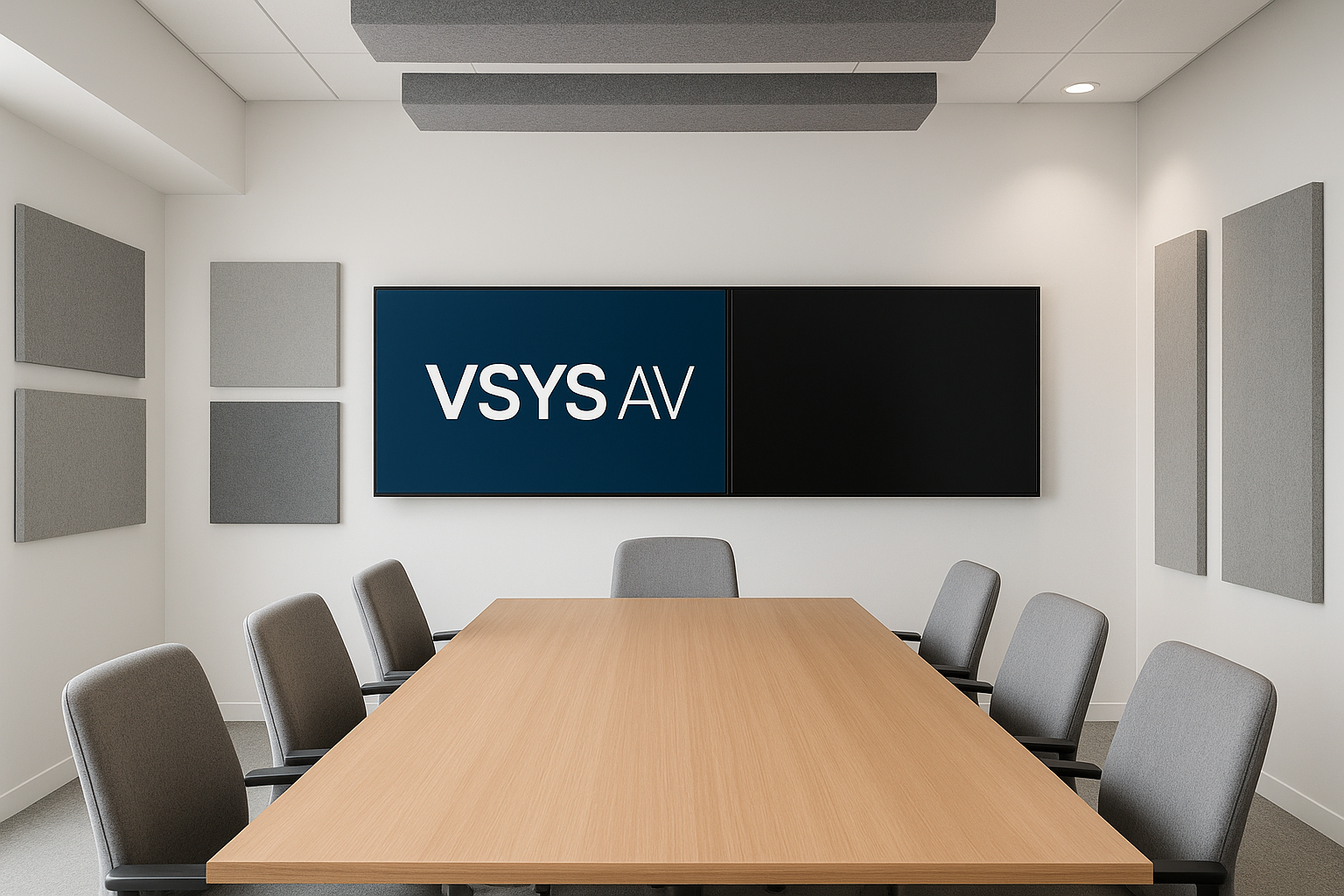
Why Acoustic Treatment Matters in Modern Conference Rooms
In today’s era of hybrid work and video collaboration, the conference room has evolved from a simple meeting space into a mission-critical communication hub. Teams depend on crystal-clear audio and visuals to connect with colleagues, clients, and stakeholders across the globe. Yet, even the most advanced video conferencing technology can be undermined by a poor acoustic environment.
Think about the last meeting you attended where echoes, background noise, or muffled voices made it hard to concentrate. No matter how good the camera or display is, bad acoustics create distraction, fatigue, and miscommunication. This is why investing in proper conference room acoustics solutions is not just a luxury it’s a necessity.
In this article, we’ll break down the most common acoustic challenges, explore effective treatment methods, and share expert strategies to help you create soundproof conference rooms that support clear communication. We’ll also show how VSYS AV’s mounting solutions can integrate seamlessly with acoustic treatments for optimal performance and aesthetics.
Common Acoustic Challenges in Conference Rooms
Before we explore solutions, let’s identify the key problems that affect sound quality in modern meeting spaces:
a. Echo and Reverberation
Hard surfaces like glass walls, concrete floors, and large displays reflect sound waves, creating echo and prolonged reverberation. This makes voices sound distant or “boomy.”
b. Noise Leakage
Many conference rooms are located near busy office areas or corridors. Without proper soundproofing, noise seeps in and out, disrupting meetings.
c. Uneven Sound Distribution
Improper speaker placement or poor room geometry can create “dead zones” where participants can’t hear clearly.
d. HVAC and Equipment Noise
Air conditioning units, projectors, and other equipment can generate low-frequency hums or mechanical noise that interfere with speech clarity.
e. Furniture and Design Factors
Minimalist modern designs often prioritize aesthetics over function. Glass partitions, open ceilings, and bare floors may look sleek but they also amplify acoustic problems.
Industry Insight: According to an AVIXA market study, nearly 40% of meeting participants cite “poor audio quality” as the biggest barrier to effective communication during virtual meetings.
The Goals of Acoustic Treatment
Effective acoustic treatment for conference rooms aims to:
- Reduce Echo & Reverberation: By absorbing sound reflections using materials like acoustic panels and ceiling baffles.
- Improve Speech Intelligibility: Ensuring that voices sound natural, clear, and evenly distributed across the room.
- Block Unwanted Noise: Using soundproofing techniques to isolate the room from external disturbances.
- Enhance AV System Performance: Optimizing the environment so that microphones, speakers, and video systems deliver their best.
Practical Acoustic Treatment Solutions for Conference Rooms
Here’s a breakdown of the most effective conference room acoustics solutions used by AV professionals and interior designers.
3.1 Acoustic Wall Panels
Wall panels made of sound-absorbing foam or fabric reduce echo and control reverberation. Installing panels on parallel walls can significantly improve speech clarity.
- Best for: Medium to large rooms with hard wall surfaces.
- Placement Tip: Position panels at the height of seated participants and opposite reflective surfaces for maximum absorption.
- Design Tip: Choose fabric-wrapped panels that match your interior aesthetics to maintain a professional look.
VSYS AV Integration: Acoustic panels can be mounted seamlessly around VSYS AV display mounts or video walls, ensuring that the AV setup remains visually clean and acoustically efficient.
3.2 Ceiling Baffles and Clouds
In rooms with high or open ceilings, hanging acoustic baffles or clouds helps absorb sound waves that would otherwise bounce around the space.
- Best for: Large boardrooms and spaces with poor ceiling acoustics.
- Placement Tip: Position them directly above the meeting table or audio pickup zone.
- Design Tip: Modern baffles come in sleek, modular designs that add architectural interest.
3.3 Carpeting and Soft Furnishings
Adding area rugs, upholstered chairs, and curtains can soften reflective surfaces and reduce mid-to-high frequency noise.
- Best for: Smaller rooms or quick acoustic fixes.
- Budget-Friendly: A cost-effective way to reduce echo without structural changes.
- Design Tip: Select neutral colors to blend with corporate interiors.
3.4 Soundproof Doors and Windows
If your conference room is located near noisy hallways or open office spaces, upgrading to acoustically rated doors and double-glazed windows can drastically reduce sound leakage.
- STC Rating: Look for doors and windows with high Sound Transmission Class (STC) ratings for maximum isolation.
- Seals and Gaskets: Install perimeter seals to block gaps where sound can escape.
3.5 Acoustic Partitions
Movable acoustic partitions or dividers can help create flexible, sound-controlled zones in multi-purpose rooms.
- Best for: Open-plan offices and modular conference spaces.
- VSYS AV Tip: Combine partitions with VSYS AV display carts or mobile mounts to create flexible hybrid meeting setups that maintain acoustic integrity.
3.6 Bass Traps
Low-frequency noise, often caused by HVAC systems or external traffic, can muddy speech clarity. Bass traps placed in room corners absorb these frequencies effectively.
- Best for: Rooms with noticeable low-frequency hum or rumble.
- Tip: Combine with wall panels for full-spectrum acoustic treatment.
Integrating Acoustic Treatment with AV Systems
Acoustic treatment doesn’t work in isolation—it must be carefully coordinated with audio-visual system design for best results. This is where VSYS AV mounting solutions play a crucial role.
4.1 Optimal Display Placement
Using VSYS AV’s wall and video wall mounts, displays can be positioned strategically to avoid sound reflections and optimize microphone pickup. A well-mounted display ensures clear sightlines and prevents sound from bouncing off screens at odd angles.
4.2 Ceiling-Mounted Solutions
Motorized ceiling mounts allow displays or microphones to be retracted when not in use, maintaining clean ceiling lines for better acoustic diffusion. This also reduces clutter that can cause unwanted reflections.
4.3 Ergonomic Monitor Arms
For huddle spaces or small rooms, ergonomic monitor arms provide flexible positioning, allowing AV equipment to adapt to different seating arrangements without compromising acoustic treatment zones.
4.4 Mobile Display Carts
For modular conference spaces, VSYS AV display carts offer mobility while maintaining stable AV setups. Acoustic panels can be positioned around carts to maintain sound control even in reconfigurable layouts.
Pro Tip: Integrating AV mounts with acoustic treatments during the design phase ensures both systems complement each other rather than compete for space.
Best Practices and Expert Tips for Acoustic Design
To create truly effective soundproof conference rooms, follow these expert recommendations:
Early Planning is Key
Acoustic treatment should be considered during the architectural and AV design stages, not as a last-minute add-on.
Use a Mix of Absorption and Diffusion
While absorbing sound is essential, diffusion elements (like textured panels or angled surfaces) prevent rooms from sounding “dead” or unnatural.
Follow the 20–25% Coverage Rule
As a rule of thumb, covering 20–25% of total wall and ceiling area with acoustic material is a good starting point for speech-focused rooms.
Prioritize the Speech Frequency Range (500–4000 Hz)
Human speech falls in this range, so treatment should focus on absorbing or diffusing these frequencies for maximum intelligibility.
Acoustic Testing and Calibration
After installation, use measurement tools to analyze reverberation times (RT60) and adjust treatments as needed.
Emerging Trends in Conference Room Acoustics
The AV industry is rapidly evolving, and so are acoustic solutions. Some notable trends include:
- Sustainable Acoustic Materials: Panels made from recycled PET or eco-friendly fabrics are gaining popularity.
- Aesthetic Integration: Modern acoustic solutions double as design elements—think colorful baffles, artistic wall panels, or fabric murals.
- Smart Acoustic Panels: Adjustable or active acoustic systems that adapt to room usage dynamically.
- Hybrid Meeting Optimization: Acoustic treatment strategies now prioritize both in-room and remote participants for balanced audio pickup.
FAQs: Conference Room Acoustic Treatment
Q1. What is the most cost-effective way to improve conference room acoustics?
Adding fabric wall panels, rugs, and curtains provides noticeable improvements at a low cost. For larger rooms, ceiling baffles are also affordable.
Q2. How can I soundproof a conference room without major renovations?
Use door seals, acoustic partitions, and window plugs. Portable acoustic panels and VSYS AV mobile mounts also help create flexible, sound-controlled zones.
Q3. How many acoustic panels do I need for a standard conference room?
Covering 20–25% of wall and ceiling area is a good baseline. The exact number depends on room size, ceiling height, and existing materials.
Q4. Do acoustic panels block external noise?
No. Panels absorb internal sound reflections but don’t block external noise. For soundproofing, you need structural solutions like doors, windows, and wall upgrades.
Q5. Can I install acoustic treatments myself?
Some treatments like stick-on panels and rugs are DIY-friendly. However, for professional conference rooms, hiring AV and acoustic experts ensures optimal placement and performance.
Q6. Are acoustic treatments compatible with video walls and displays?
Absolutely. VSYS AV’s mounting systems are designed to integrate seamlessly with acoustic panels, ensuring no interference with displays or microphones.
Q7. How long does acoustic treatment installation take?
Small rooms can be treated in a few hours, while larger or complex spaces may take a few days depending on structural work.
Q8. What is RT60 and why does it matter?
RT60 is the time it takes for sound to decay by 60 dB. Ideal RT60 for conference rooms is 0.4–0.6 seconds. Longer times cause echo; shorter can make rooms sound unnatural.
Build Better Meeting Experiences with Smart Acoustic Design
Great audio isn’t just about microphones and speakers it starts with the room itself. By addressing echo, noise leakage, and reverberation, you create a soundproof conference room where ideas flow clearly and efficiently.
When combined with VSYS AV’s precision mounting solutions, acoustic treatments enhance not only sound quality but also the overall professionalism and flexibility of your meeting spaces.
Whether you’re upgrading a single boardroom or designing a new office, investing in conference room acoustics solutions is one of the smartest ways to improve communication, productivity, and client impressions.
Ready to transform your conference rooms?
Explore VSYS AV’s range of professional mounting solutions at vsysav.com and build meeting spaces that sound as good as they look.
Quick Summary Table
| Acoustic Solution | Primary Benefit | Best For | VSYS AV Integration |
|---|---|---|---|
| Wall Panels | Reduce echo & reverberation | Medium–Large rooms | Around wall mounts |
| Ceiling Baffles | Control sound in tall spaces | Boardrooms, large rooms | Above display zones |
| Carpets & Furnishings | Affordable absorption | Small rooms, quick fixes | Easy to combine |
| Soundproof Doors/Windows | Block external noise | Noisy office locations | Complements AV zones |
| Acoustic Partitions | Flexible zone control | Open-plan spaces | Pair with carts |
| Bass Traps | Absorb low frequencies | Rooms with HVAC noise | Corner installations |