Menu
Close
Use the button above or message us on WhatsApp for a quote, technical documentation, or engineering support on the VSPS100-M.
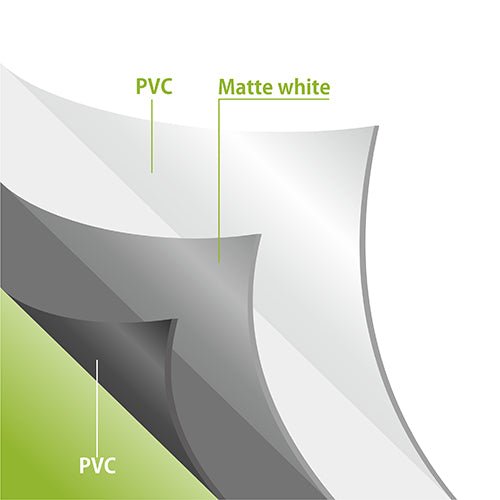
The VSPS100-M’s viewing surface is a matte white PVC-coated fabric (fiberglass-backed fabric optional) rated at 1.0 gain, tensioned across a 2.21 x 1.24m viewing area at a 16:9 aspect ratio. A 4-side black masking border, wider at the top (5cm) than the bottom (4cm) and sides (3cm), frames the image to lift perceived contrast without altering the projector’s actual output, and the fabric surface is wipeable for spot-cleaning between uses.
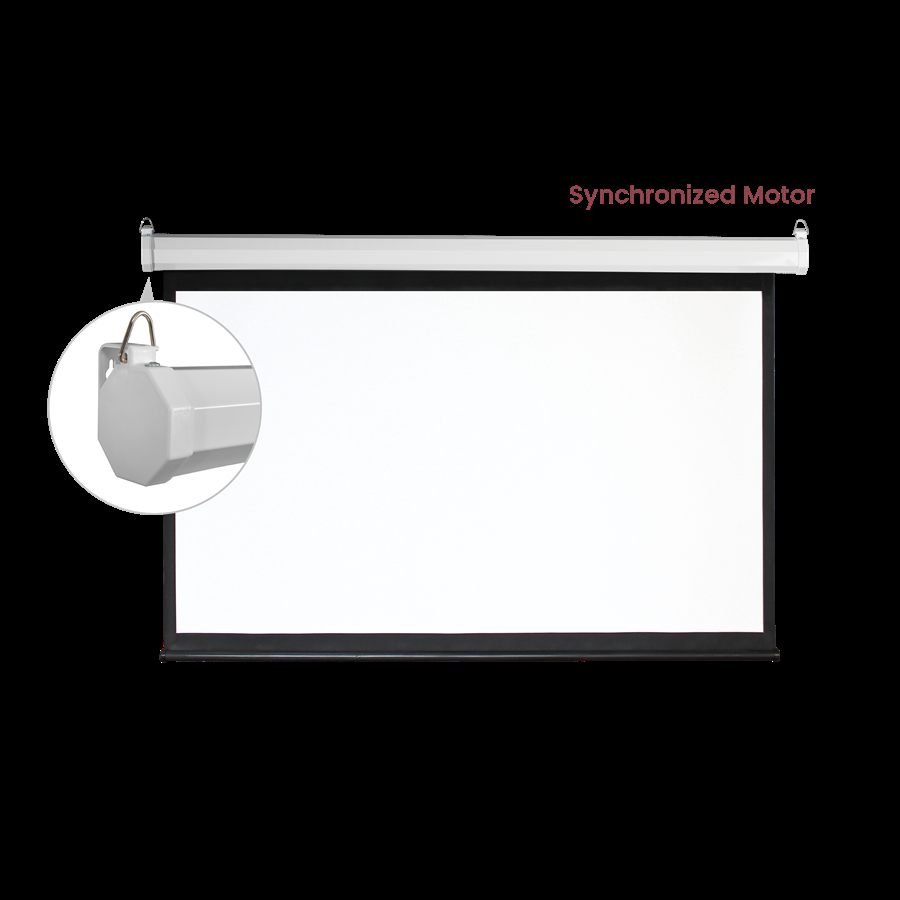
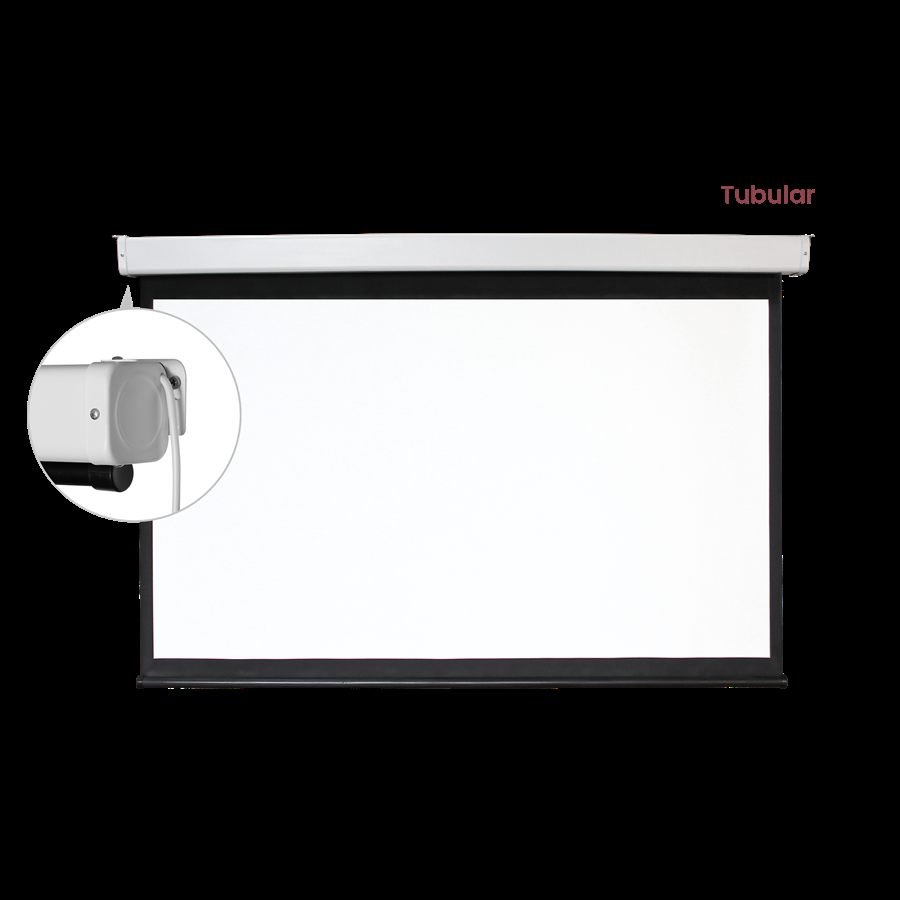
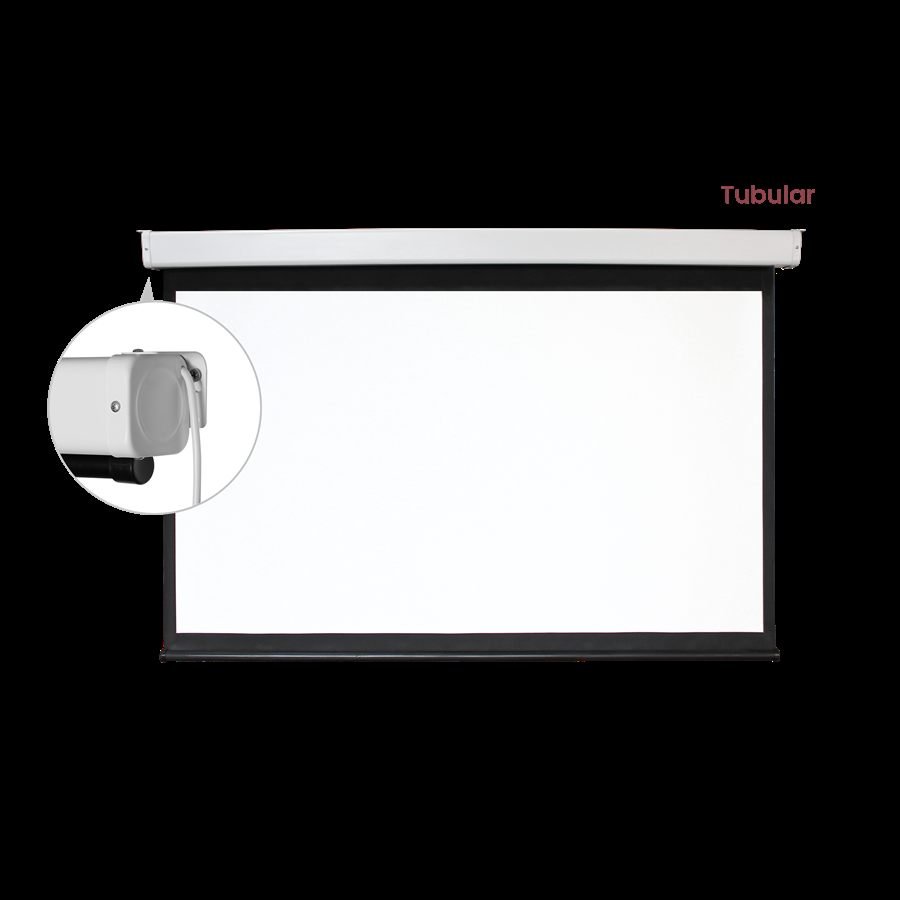
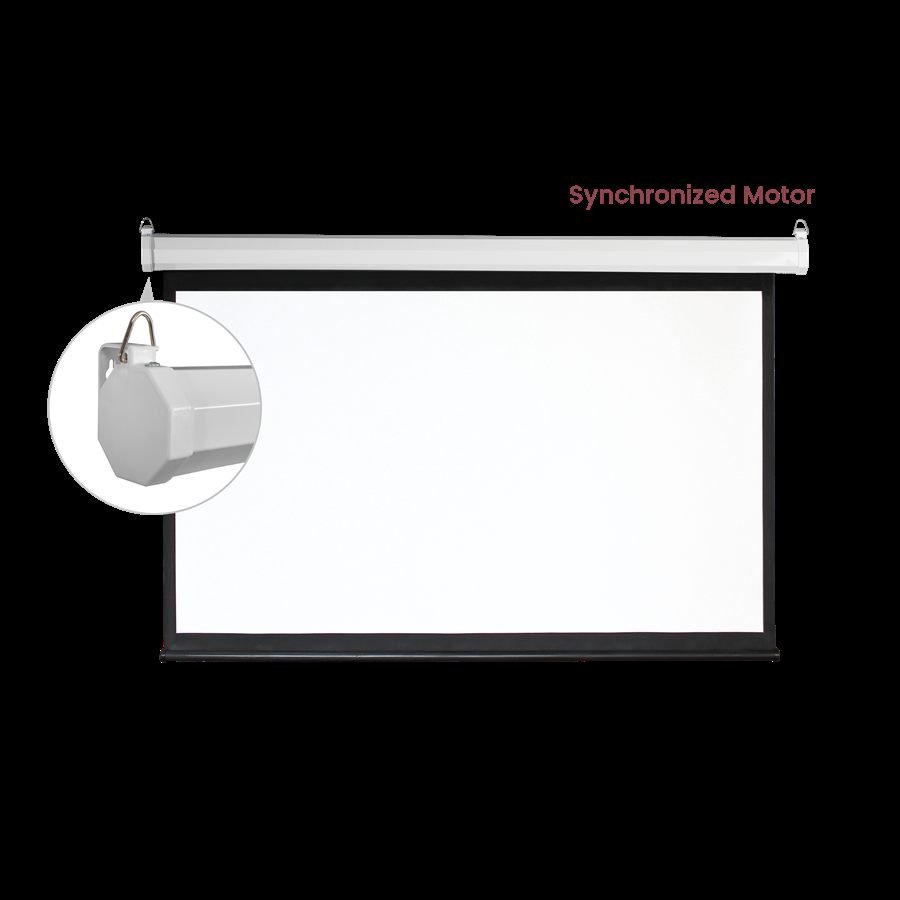
The fabric stows inside a 241mm steel roller case finished in white, driven by a tubular motor built for repeated drop/retract cycling rather than one-off use, with an optional synchronized motor variant available where drop timing across multiple screens needs to match. Control is by RF remote or a hardwired manual keypad switch, and the assembly mounts to either a wall or a ceiling structure.
The 160° viewing angle and 1.0 gain surface put the VSPS100-M in rooms where seating spans a wide arc relative to the screen rather than a narrow, centered viewing cone: classroom rows extending to the side walls, training-room seating around a U-shaped table, or a walk-in demo floor where attendees approach from multiple angles. The masking border’s contrast lift matters most in rooms that can’t be fully blacked out, since the framing effect partially compensates for ambient light bleeding onto the fabric edge.
Because the standard tubular motor isn’t synchronized across units by default, integrators specifying more than one VSPS-series screen in the same room, for a matched dual-screen classroom or a multi-screen presentation wall, should confirm whether the optional synchronized motor variant is needed before ordering, since motor sync isn’t a field-retrofittable upgrade after installation. Control wiring routes to standard power and either the RF remote receiver or a wall-mounted keypad, both supported without additional control hardware.
The VSPS100-M mounts to either a wall or a ceiling structure via the roller case’s integrated brackets, then wires to standard power for the motor. Once the case is fixed and level, the fabric drops and retracts on RF remote or wall-keypad command; a masking border that looks uneven after installation almost always traces back to the case being mounted slightly out of level rather than a fabric-tensioning fault, so check level before final fixing.
| Product Category | Motorized Electric Projection Screen |
| Screen Size (Diagonal) | 100″ (16:9) |
| Viewing Area (W x H) | 2.21m x 1.24m |
| Gain | 1.0 |
| Viewing Angle | 160° |
| Screen Material | Matte White PVC Fabric (Fiberglass-Backed Optional) |
| Masking Borders | Top 5cm, Bottom 4cm, Sides 3cm |
| Motor Type | Tubular Motor (Synchronized Motor Optional) |
| Case Material | Steel |
| Case Dimension | 241mm (9.5″) |
| Case Color | White |
| Installation | Wall Mounted, Ceiling Mounted |
| Control | RF Remote, Manual Keypad Switch |
| Maintenance | Wipeable / Cleanable Surface |
| Certifications | CE, UKCA, RoHS, AS/NZS Safety Report |
The 100-inch figure describes the screen measured corner to corner; the usable projected image area is 2.21 x 1.24 meters at the 16:9 aspect ratio. Confirm throw distance against this width and height, not the diagonal alone, when sizing a projector for the room.
Within limits, yes. The 4-side black border (5cm top, 4cm bottom, 3cm sides) doesn’t change the projector’s actual brightness or contrast output, but framing the image against black raises perceived contrast, an optical effect rather than a hardware one, most useful in rooms that aren’t fully blacked out.
Not with the standard tubular motor, which runs independently per screen. The optional synchronized motor variant is built for this and should be specified at order time, since motor sync isn’t a field-retrofittable upgrade once a standard tubular motor unit has already shipped.
Both are matte white with the same 1.0 gain rating; the fiberglass-backed fabric adds a reinforcing layer behind the PVC coating for extra dimensional stability, resisting wrinkling or sag over long-term use better than the standard fabric. Choose it for installs expecting years of continuous drop/retract cycling.
Both an RF remote control and a hardwired manual keypad switch are supported, wired to the same tubular motor. Either lets the screen drop or retract on command; the keypad suits installs wanting a fixed wall control point instead of relying on a handheld remote that can go missing.
Yes, the steel roller case supports both wall and ceiling installation via its integrated mounting brackets, so the choice comes down to the room’s structural fixing points and where the projector’s throw path clears best, not a limitation of the screen hardware itself.
An uneven-looking border after mounting almost always traces back to the roller case being installed slightly out of level rather than a fabric defect. Check the case’s level with a spirit level before final fixing, since a small case tilt reads as a visibly uneven border at full drop.